Your medicine cabinet can start in a pot on your windowsill.
Imagine this:
You feel cramps coming on. Instead of reaching for a pill bottle, you step into your kitchen, snip a few leaves of fresh lemon balm, and steep a calming tea.
You can’t sleep because your mind is racing. You walk to your balcony, pinch some lavender buds, and tuck them into your pillow.
This isn’t a dream. This is homegrown herbal medicine – and it’s easier than you think.
Here are 5 essential herbs every woman should grow at home, no matter how small your space.
Why grow your own herbs?
| Benefit | Why It Matters |
|---|---|
| 🌿 Freshness | Dried herbs lose potency over time. Fresh is stronger. |
| 💰 Affordability | One $4 seed packet = unlimited herbs for months. |
| 🧠 Connection | Tending plants lowers cortisol and grounds you. |
| 🌍 Transparency | You know exactly what went into your medicine (no pesticides, no fillers). |
| 🚪 Convenience | Your apothecary is always steps away. |
The 5 Must-Grow Herbs for Women’s Health
1. 🌸 Red Raspberry Leaf – The Uterine Toner
Best for: Menstrual cramps, heavy periods, postpartum recovery
| Fact Sheet | |
|---|---|
| Sunlight | Partial sun to full sun |
| Water | Moderate – keep soil moist but not soggy |
| Harvest | Leaves when plant is 12–18 inches tall |
| Grows in | Garden bed or large pot (12+ inches deep) |
How to use:
Steep 1-2 tablespoons of dried (or 4-5 fresh) leaves in hot water for 10-15 minutes. Drink 1-3 cups daily, especially the week before your period.
Why it works:
Red raspberry leaf is rich in fragarine, an alkaloid that tones the uterine muscles. It’s a traditional midwife’s favorite for easing labor and postpartum bleeding.
💡 Start drinking raspberry leaf tea after your period ends, not during. It can make flow heavier.
2. 🍃 Lemon Balm – The Calm-Your-Nerves Herb
Best for: Anxiety, insomnia, PMS irritability, bloating

| Fact Sheet | |
|---|---|
| Sunlight | Partial shade to full sun |
| Water | Regular – don’t let soil dry completely |
| Harvest | Leaves anytime; best before flowering |
| Grows in | Pots (it spreads aggressively – containers are safer!) |
How to use:
Add 5-10 fresh leaves to hot water for a soothing tea. Or crush leaves and rub on temples for tension headaches.
Why it works:
Lemon balm contains rosmarinic acid, which boosts GABA (your brain’s calming neurotransmitter). Studies show it reduces anxiety and improves sleep quality without drowsiness.
💡 Grow lemon balm in a container. In the ground, it takes over your garden like a friendly but pushy relative.
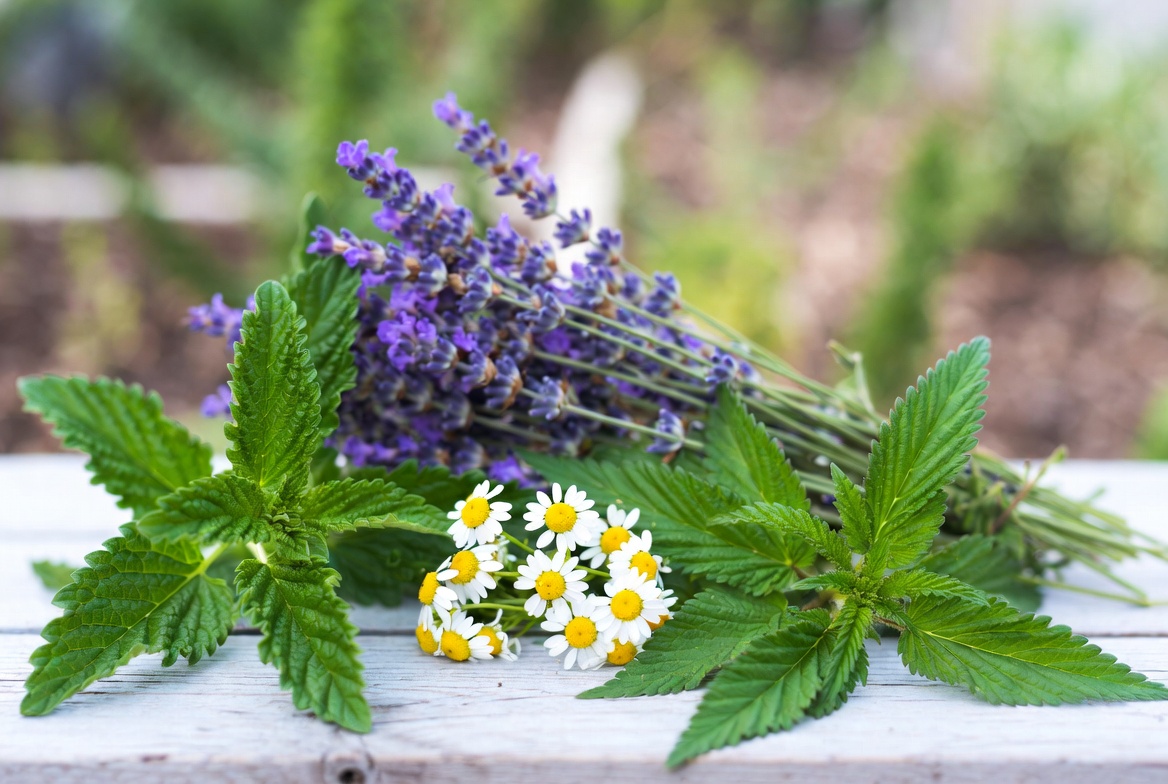
3. 💜 Lavender – The Sleep & Stress Savior
Best for: Insomnia, anxiety, headaches, menstrual pain
| Fact Sheet | |
|---|---|
| Sunlight | Full sun (at least 6 hours daily) |
| Water | Low – let soil dry between waterings |
| Harvest | Cut flower stalks just as buds begin to open |
| Grows in | Garden bed or medium pot (needs good drainage) |
How to use:
-
Tea: Steep 1 tablespoon of dried flowers in hot water for 10 minutes.
-
Pillow sachet: Fill a small cloth bag with dried lavender buds and tuck inside your pillowcase.
-
Bath: Add a handful of fresh or dried flowers to warm bathwater.
Why it works:
Lavender’s scent increases slow-wave sleep (deep sleep) and reduces heart rate and blood pressure. One study found that lavender oil improved sleep quality by 60% in postpartum mothers.
💡 English lavender (Lavandula angustifolia) is the most medicinal and cold-hardy variety.
4. 🌼 Chamomile – The Gentle Antispasmodic
Best for: Menstrual cramps, digestive upset, anxiety, insomnia

| Fact Sheet | |
|---|---|
| Sunlight | Full sun to partial shade |
| Water | Moderate – water when top inch of soil is dry |
| Harvest | Flowers when petals flatten (not when still domed) |
| Grows in | Garden bed or medium pot (10+ inches) |
How to use:
Steep 2-3 tablespoons of fresh flowers (or 1 tablespoon dried) in hot water for 5-10 minutes. Drink up to 3 cups daily.
Why it works:
Chamomile contains apigenin, a flavonoid that binds to GABA receptors in the brain (similar to how anti-anxiety medications work). It’s also a powerful antispasmodic, relaxing the uterine and intestinal muscles.
💡 German chamomile is easier to grow from seed than Roman chamomile and has higher medicinal value.
5. 🌱 Nettle – The Iron-Rich Superfood
Best for: Heavy periods, iron deficiency, fatigue, allergy relief
| Fact Sheet | |
|---|---|
| Sunlight | Partial shade to full sun |
| Water | Keep soil consistently moist |
| Harvest | Young leaves before flowering (wear gloves!) |
| Grows in | Large pot (12+ inches) or garden bed |
How to use:
-
Infusion (strongest): Steep 1/2 cup of fresh (or 1/4 cup dried) nettle leaves in a quart jar of hot water for 4-8 hours. Drink throughout the day.
-
Soup or pesto: Blanch leaves briefly to remove sting, then blend into recipes.
Why it works:
Nettle is one of the most mineral-dense plants on earth. It’s packed with iron, calcium, magnesium, potassium, and silica – all critical for women with heavy periods or low energy.
⚠️ Nettle leaves have tiny hairs that sting when fresh. Always wear gloves when harvesting, and cook or dry them before handling with bare hands.
Quick Reference Chart
| Herb | Primary Use | Easiest Growing Method | Harvest Part |
|---|---|---|---|
| Red Raspberry Leaf | Uterine health, cramps | Large pot or garden bed | Leaves |
| Lemon Balm | Anxiety, sleep, bloating | Container (prevents spreading) | Leaves |
| Lavender | Sleep, headaches, stress | Well-drained pot or garden | Flowers |
| Chamomile | Cramps, digestion, anxiety | Garden bed or medium pot | Flowers |
| Nettle | Iron deficiency, heavy periods | Large pot (keeps it contained) | Young leaves |
How to start your home herb garden
Step 1: Choose your space
| Space | Best Herbs for You |
|---|---|
| Sunny windowsill | Lemon balm, chamomile |
| Small balcony | Lavender (dwarf variety), lemon balm, chamomile |
| Backyard garden | All five! |
Step 2: Get your supplies
-
Pots with drainage holes (terracotta is great for lavender)
-
Organic potting soil (not garden soil – it’s too heavy for pots)
-
Seeds or small starter plants (nettle and raspberry leaf are easier from plants)
-
Labels (trust me, you’ll forget which is which)
Step 3: Plant and label
Follow the depth instructions on your seed packet. For starter plants, dig a hole twice as wide as the root ball.
Step 4: Water wisely
Most herbs prefer deep, infrequent watering over shallow daily sprinkles. Stick your finger in the soil – if the top inch is dry, it’s time to water.
Step 5: Harvest regularly
Regular harvesting encourages bushier growth. Never take more than 1/3 of the plant at once.
How to preserve your herbs
| Method | Best For | How To |
|---|---|---|
| Air drying | Lavender, chamomile, raspberry leaf | Tie small bundles and hang upside down in a dark, airy room for 1-2 weeks |
| Dehydrator | All herbs (fastest) | Set to 95-115°F (35-46°C) for 2-6 hours |
| Freezing | Lemon balm, nettle (for cooking) | Chop leaves, place in ice cube trays with water or oil |
| Infused oil | Lavender (for massage or salves) | Cover dried herbs with carrier oil and steep for 4-6 weeks |
A simple tea blend to get you started
“Moon Cycle Harmony Tea”
(Supports menstrual health and calms PMS)
Combine equal parts:
-
🌸 Red raspberry leaf (uterus tonic)
-
🍃 Lemon balm (calms nerves)
-
🌼 Chamomile (gentle antispasmodic)
Steep 1 tablespoon of the blend in hot water for 10-15 minutes. Drink 1-2 cups daily in the week leading up to your period.
Your first growing challenge
Pick one herb from this list and start it this week.
Which one will it be?
-
🌸 Red raspberry leaf for period support?
-
🍃 Lemon balm for anxiety relief?
-
💜 Lavender for better sleep?
-
🌼 Chamomile for cramps and calm?
-
🌱 Nettle for iron and energy?
Leave a comment below – I’d love to cheer you on.
Coming next week
👉 “How to Make a Simple Herbal Salve for Menstrual Cramps”
Sign up for our newsletter so you don’t miss it ↓